
The Beginning of My Father’s Dementia Journey


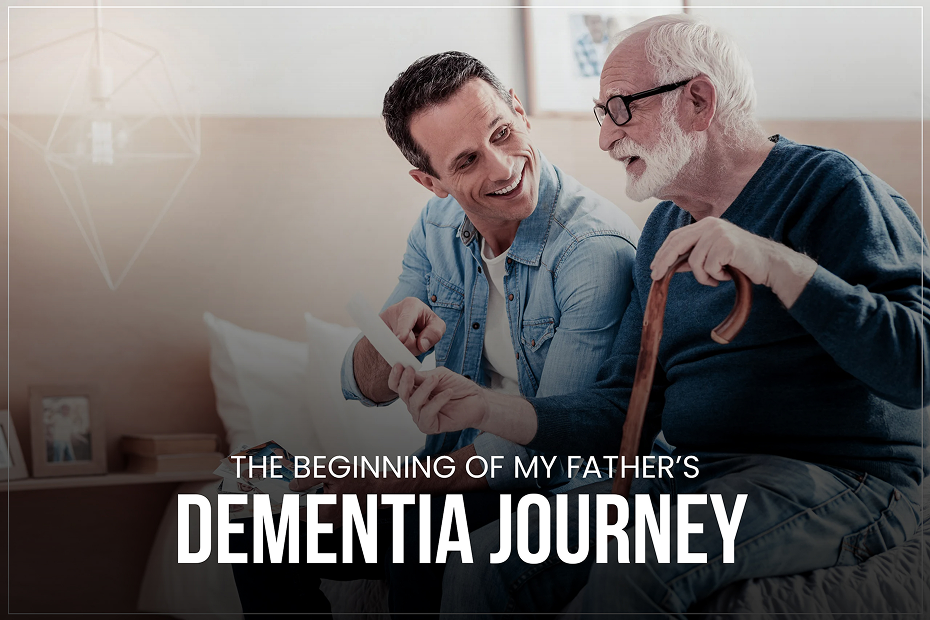
I often find myself drifting back to a time when life was simpler, when Baba’s laughter filled our home, when his stories painted the evenings with magic, and when his gentle voice carried the kind of wisdom that shaped who I am today. Those memories are my anchors, fragments of love, warmth, and the man who was once the center of my world.
Down Memory Lane
My earliest memories of Baba are steeped in tenderness. Each evening, I would wait by the window, eager for his return from work. He never came home empty-handed, sometimes a little doll, sometimes a green fish-shaped candy, tiny tokens that meant the world to me.
Weekends were our adventures. In Sonarpur, amidst the whispering bamboo leaves and monsoon rains, we’d walk barefoot through the clay, soaking in nature’s rhythm. Baba believed life’s greatest joys were found in the simplest moments, the smell of rain, the call of a bird, the laughter of a child.
He was a man of infinite curiosity and an even greater sense of humor. His spontaneous adventures, like waking us early one Sunday morning with a mischievous grin, saying, “Chal Nirudeshe jai!” (“Let’s go somewhere with no destination”), became treasured stories of my childhood.
Professionally, he was a pioneer, the chief engineer behind India’s first underground metro in Kolkata. But to me, his greatest legacy wasn’t made of tunnels or steel; it was the laughter he left behind, the values he lived by, and the love he gave so abundantly.
When the First Signs Appeared
It began so quietly that we barely noticed. A misplaced key here. A forgotten conversation there. We laughed it off at first, “Just old age,” we told ourselves. But soon, the signs grew harder to ignore.
Baba, who once had a photographic memory, began repeating stories within hours. He’d forget he’d eaten breakfast or lose track of the day. Once, he gave away a large sum of money to a stranger, an act that seemed unlike him but one we explained away with affection and confusion.
The hardest part was watching him lose confidence. The man who once navigated Kolkata’s busy streets without hesitation suddenly struggled to recognize familiar routes. His impeccable sense of humor gave way to bouts of frustration and anger that left us bewildered.
At the time, we didn’t know what we were facing. We thought it was fatigue, stress, or perhaps aging. I wish I had known then what I know now, that these were early signs of dementia.
We made mistakes, and we reacted with impatience at times. Looking back, I’ve learned it’s okay to not be okay. Dementia doesn’t just affect the person diagnosed; it transforms the emotional landscape of the entire family.
The Day Everything Changed
In 2014, everything came into sharp, painful focus. Baba had been complaining of headaches, unlike any before. When we took him for medical tests, the MRI revealed what we feared but couldn’t yet comprehend: ominous white patches in his brain. The words “Vascular Dementia” changed our lives forever.
That day, the world grew quieter. I remember looking at him, still strong, still smiling, and feeling a lump in my throat. How could I prepare myself to lose him slowly, piece by piece, memory by memory?
Denial was our first instinct. He seemed so normal at times, still reading the newspaper, still cracking jokes. But deep down, we knew the course was set. Dementia doesn’t announce itself all at once; it unfolds gently, then all at once.
For my mother, the diagnosis was heartbreaking. Her life partner, her companion for over five decades, was beginning to drift into a world she couldn’t reach. For me, living halfway across the world, the distance made the pain even sharper
Holding On Through the Unraveling
Even in those early stages, Baba’s grace never left him. We sang old songs, revisited photo albums, and held his hands a little tighter. I began to understand that love doesn’t vanish when memories fade; it changes form
That period taught me some of the hardest lessons of my life:
- Never dismiss the early signs of dementia
- Seek help early; diagnosis gives you time to prepare, to plan, to hope.
- And above all, approach your loved one with compassion, not correction.
Our journey was not perfect. It was filled with fear, guilt, laughter, and moments of deep connection. But it was real, and it was ours
If I could go back in time, I would listen to the silences between Baba’s words. I would see those subtle signs for what they were, his mind’s quiet plea for help.
To Sum Up
Dementia is not just about forgetting; it’s about remembering differently. It’s about finding love where logic fails, about holding hands when words no longer suffice, and about cherishing the person who once held you through every storm.
Even now, when I close my eyes, I can still hear Baba’s laughter echoing through the years. Though his memories faded, the love we shared remains eternal, untouched, unforgotten.